Cần hỗ trợ hoặc tư vấn Gọi Ngay + (84) 888 728 730

Monthly Archives: September 2026

AI quotation extraction: what to test before importing into ERP
Category: Blog, News Comments: 0
Quotation documents beside a laptop table illustrating a review of AI-extracted business data

Reading a quotation PDF successfully is not the same as producing data that is safe to import into ERP. Before connecting an automated workflow, test critical fields, difficult documents and the cases that require human approval. The aim is to prevent a small extraction error from becoming an incorrect transaction.

Quotation documents beside a laptop table illustrating a review of AI-extracted business data
AI-generated illustration, not an actual customer document or implementation.

Start with a test set and independently checked answers

Include quotations from different suppliers: text-based PDFs, scanned pages, multi-page tables and revised versions. Have a business reviewer establish the correct values from the originals before comparing the AI output. Do not use the model's own output as the answer key.

A small pilot could begin with 20 documents. That is a suggested starting point, not a sample size that proves performance across the whole business. Add missing document types before drawing broader conclusions.

Six failure cases worth testing

  1. Wrong units: cases, boxes, individual items or labour hours. In a hypothetical example, VND 120,000 for a box of 12 must not silently become VND 120,000 per item. Apply conversions only through an approved business rule.
  2. Wrong currency or number format: do not infer VND or USD from a supplier's location. Check currency labels, separators and a separate currency field.
  3. Missing or shifted line items: test page breaks, repeated table headings and descriptions spanning several lines. Compare line counts with the original, not only the total.
  4. Missing information: flag an empty field for review. Do not invent payment terms or quotation validity dates.
  5. Wrong version or duplicate import: a quotation number can have a revised document. Retain document identifiers and decide how revisions are handled before creating transactions.
  6. Failed reconciliation: compare quantities, unit prices, discounts and totals shown in the source. A business reviewer should resolve differences; the workflow should not change numbers merely to make them balance.

A high confidence score is not a business approval

Google Cloud's Document AI evaluation guidance distinguishes precision, recall and confidence thresholds. A confidence score is not a guarantee that a particular transaction is correct. Review results by field and by the impact of a potential error.

For fields that can change the supplier or payable amount, route early pilot results to an approval queue. Automate subsequent steps only after defining acceptance criteria, exception records and a way to stop invalid data from progressing.

Keep an audit trail that supports controlled retries

  • The source document and extractor version.
  • The extracted value, reviewer-confirmed value and reason for any change.
  • Validation results, approver and target transaction identifier.
  • Retry status so resubmitting a request does not create another transaction.

Frequently asked questions

Should AI connect directly to the live ERP at the start?

Begin with draft records or a test environment and a reviewer. A successful demonstration on a few documents is not evidence that every control can be removed.

Can the pilot use real quotations?

Use only data authorized for processing in an approved tool. Remove or mask information that is unnecessary for the test and restrict access to the sample set.

Planning a document-extraction pilot? Read the Google Drive handover checklist, explore Viet Nis services or request a consultation. Start with document types, expected volume and the destination system; do not send sensitive documents through a public form. Call +84 888 728 730.

Read more
Employee offboarding: a Google Drive handover checklist
Category: Blog, News Comments: 0

A Google Drive offboarding checklist should identify business files, establish ownership and test the incoming employee's access before the departing account is retired. Shared drives help keep team documents under organizational control. Sharing a folder in My Drive does not turn it into a Shared drive.

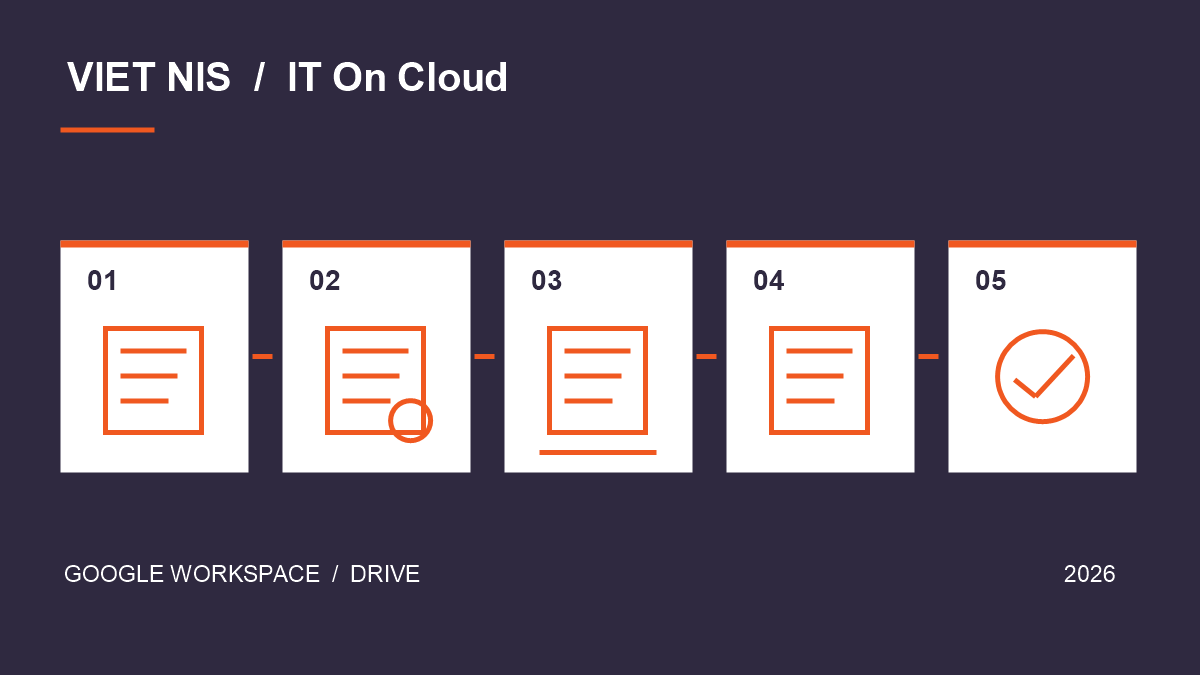
Five-step diagram for inventory, classification, handover, access testing and sign-off in Google Drive
Suggested workflow: inventory → classify → hand over → test → sign off. Original illustration by Viet Nis.

Why a shared folder still needs a handover

Google's documentation explains that Shared drive files belong to the organization and remain when a member leaves. My Drive uses a different ownership model. Check where documents actually live, rather than relying on the list of people who can open them.

Consider a hypothetical sales team: an account manager keeps quotations in My Drive and shares a folder with colleagues. The sales director can see it, but that alone does not establish that the business has completed a durable handover.

Five steps before retiring an account

  1. Inventory by business process. List quotations, agreements, trackers and project documents. Record the URL, owner, storage location and incoming custodian. Include forms, attachments and links that colleagues actively use.
  2. Classify ownership. Separate organizational files, externally owned material and personal data. Customer-owned documents require an access arrangement with their owner; not everything visible to an employee can be transferred.
  3. Choose a suitable handover method. Move team material to a Shared drive where the edition, permissions and file type allow it. Ask an administrator to assess ownership transfer or retention for exceptions. Test a small set before moving many files.
  4. Test as the recipient. Open existing links and confirm the required read, edit or download actions. Test external collaborators separately. A permissions list is not proof that the real workflow still works.
  5. Sign off and revoke access. Have the business owner accept the inventory. IT should handle the departing account, groups and sharing permissions through the offboarding procedure, recording unresolved exceptions.

Grant the access the role needs

Google distinguishes Manager, Content manager, Contributor, Commenter and Viewer. Use the Shared drive permissions table to match access to actual work. Someone who only reads documents does not need authority to manage members.

Keep a usable handover record

  • Document URL and storage location after handover.
  • Incoming custodian, required permissions and test result.
  • Exceptions, including external files and broken links.
  • Sign-off date and the person responsible for outstanding work.

Frequently asked questions

Is sharing a My Drive folder enough?

No. Access and ownership are different. Review each set of files and confirm that the recipient can perform the necessary work.

Do Shared drives replace backups?

Shared storage should not be the entire recovery plan. Define retention, backup and restore testing for important business data.

Where should a small business start?

Pilot the checklist with one department before the next staff change. Count broken links and documents without an incoming custodian to identify unfinished work.

Need help reviewing your company's Drive structure? Explore Google Workspace services from Viet Nis or request a consultation. Include your user count, current storage setup and handover date. Call +84 888 728 730.

Read more
Technology KPIs SME Leaders Should Track
Category: Blog Comments: 0

Technology KPIs SME Leaders Should Track is becoming a practical priority for small and mid-sized businesses expanding in Vietnam and Asia.

Technology KPIs SME Leaders Should Track — Việt Nis IT On Cloud
Technology KPIs SME Leaders Should Track

The common business problem

Ban lãnh đạo khó biết đầu tư IT đang giảm rủi ro hay chỉ làm tăng chi phí. When the work is managed through disconnected spreadsheets and messages, cost, data quality and accountability become difficult to control.

Technology KPIs SME Leaders Should Track — Việt Nis IT On Cloud
Technology KPIs SME Leaders Should Track

A practical implementation framework

  1. Define the business outcome and baseline metrics before choosing a tool.
  2. theo dõi availability, incident, adoption, security, cost per user và business outcome.
  3. Run a pilot with one team and test access, auditability and recovery.
  4. Measure adoption, cycle time, cost and error rate after 30–60 days.

SME checklist

  • Assign a business owner and a data owner.
  • Use role-based access, MFA and activity logs.
  • Maintain backup, export and service-continuity options.
  • Review SLA, data terms and total cost before signing.

Conclusion

Technology creates value when it solves a defined problem, has an accountable owner and is measured through operational results. Start with a focused pilot, standardize the data, then scale through a roadmap.

Technology KPIs SME Leaders Should Track — Việt Nis IT On Cloud
Technology KPIs SME Leaders Should Track

Frequently asked questions

Does an SME need a large investment from day one?

No. Prioritize one high-impact workflow, validate the KPI and scale only after the pilot proves its value.

Technology KPIs SME Leaders Should Track — Việt Nis IT On Cloud
Technology KPIs SME Leaders Should Track

Should we build in-house or use a partner?

Keep control of core processes and data, while using a partner for architecture, integration and specialist operations.

Technology KPIs SME Leaders Should Track — Việt Nis IT On Cloud
Technology KPIs SME Leaders Should Track

What should we do next?

Viet Nis can review your current setup and propose a practical roadmap. Contact the IT On Cloud team for a quick consultation.

Technology KPIs SME Leaders Should Track — Việt Nis IT On Cloud
Technology KPIs SME Leaders Should Track
Read more
A Lean IT Operating Model for SMEs
Category: Blog Comments: 0

A Lean IT Operating Model for SMEs is becoming a practical priority for small and mid-sized businesses expanding in Vietnam and Asia.

A Lean IT Operating Model for SMEs — Việt Nis IT On Cloud
A Lean IT Operating Model for SMEs

The common business problem

IT bị kéo vào xử lý sự vụ nhưng thiếu quy trình dịch vụ, tài sản, thay đổi và sự cố. When the work is managed through disconnected spreadsheets and messages, cost, data quality and accountability become difficult to control.

A Lean IT Operating Model for SMEs — Việt Nis IT On Cloud
A Lean IT Operating Model for SMEs

A practical implementation framework

  1. Define the business outcome and baseline metrics before choosing a tool.
  2. service catalog, ticket, asset inventory, change control, SLA và báo cáo định kỳ.
  3. Run a pilot with one team and test access, auditability and recovery.
  4. Measure adoption, cycle time, cost and error rate after 30–60 days.

SME checklist

  • Assign a business owner and a data owner.
  • Use role-based access, MFA and activity logs.
  • Maintain backup, export and service-continuity options.
  • Review SLA, data terms and total cost before signing.

Conclusion

Technology creates value when it solves a defined problem, has an accountable owner and is measured through operational results. Start with a focused pilot, standardize the data, then scale through a roadmap.

A Lean IT Operating Model for SMEs — Việt Nis IT On Cloud
A Lean IT Operating Model for SMEs

Frequently asked questions

Does an SME need a large investment from day one?

No. Prioritize one high-impact workflow, validate the KPI and scale only after the pilot proves its value.

A Lean IT Operating Model for SMEs — Việt Nis IT On Cloud
A Lean IT Operating Model for SMEs

Should we build in-house or use a partner?

Keep control of core processes and data, while using a partner for architecture, integration and specialist operations.

A Lean IT Operating Model for SMEs — Việt Nis IT On Cloud
A Lean IT Operating Model for SMEs

What should we do next?

Viet Nis can review your current setup and propose a practical roadmap. Contact the IT On Cloud team for a quick consultation.

A Lean IT Operating Model for SMEs — Việt Nis IT On Cloud
A Lean IT Operating Model for SMEs
Read more
Building a 12-Month Technology Roadmap for an SME
Category: Blog Comments: 0

Building a 12-Month Technology Roadmap for an SME is becoming a practical priority for small and mid-sized businesses expanding in Vietnam and Asia.

Building a 12-Month Technology Roadmap for an SME — Việt Nis IT On Cloud
Building a 12-Month Technology Roadmap for an SME

The common business problem

Đầu tư công nghệ thiếu thứ tự ưu tiên dẫn đến nhiều dự án dang dở và ít kết quả đo được. When the work is managed through disconnected spreadsheets and messages, cost, data quality and accountability become difficult to control.

Building a 12-Month Technology Roadmap for an SME — Việt Nis IT On Cloud
Building a 12-Month Technology Roadmap for an SME

A practical implementation framework

  1. Define the business outcome and baseline metrics before choosing a tool.
  2. đánh giá hiện trạng, mục tiêu kinh doanh, dependency, quick win, ngân sách và KPI.
  3. Run a pilot with one team and test access, auditability and recovery.
  4. Measure adoption, cycle time, cost and error rate after 30–60 days.

SME checklist

  • Assign a business owner and a data owner.
  • Use role-based access, MFA and activity logs.
  • Maintain backup, export and service-continuity options.
  • Review SLA, data terms and total cost before signing.

Conclusion

Technology creates value when it solves a defined problem, has an accountable owner and is measured through operational results. Start with a focused pilot, standardize the data, then scale through a roadmap.

Building a 12-Month Technology Roadmap for an SME — Việt Nis IT On Cloud
Building a 12-Month Technology Roadmap for an SME

Frequently asked questions

Does an SME need a large investment from day one?

No. Prioritize one high-impact workflow, validate the KPI and scale only after the pilot proves its value.

Building a 12-Month Technology Roadmap for an SME — Việt Nis IT On Cloud
Building a 12-Month Technology Roadmap for an SME

Should we build in-house or use a partner?

Keep control of core processes and data, while using a partner for architecture, integration and specialist operations.

Building a 12-Month Technology Roadmap for an SME — Việt Nis IT On Cloud
Building a 12-Month Technology Roadmap for an SME

What should we do next?

Viet Nis can review your current setup and propose a practical roadmap. Contact the IT On Cloud team for a quick consultation.

Building a 12-Month Technology Roadmap for an SME — Việt Nis IT On Cloud
Building a 12-Month Technology Roadmap for an SME
Read more
Running a Multilingual Technology Stack Across Asia
Category: Blog Comments: 0

Running a Multilingual Technology Stack Across Asia is becoming a practical priority for small and mid-sized businesses expanding in Vietnam and Asia.

Running a Multilingual Technology Stack Across Asia — Việt Nis IT On Cloud
Running a Multilingual Technology Stack Across Asia

The common business problem

Mở rộng thị trường kéo theo ngôn ngữ, múi giờ, tiền tệ, quy định và hỗ trợ khác nhau. When the work is managed through disconnected spreadsheets and messages, cost, data quality and accountability become difficult to control.

Running a Multilingual Technology Stack Across Asia — Việt Nis IT On Cloud
Running a Multilingual Technology Stack Across Asia

A practical implementation framework

  1. Define the business outcome and baseline metrics before choosing a tool.
  2. tách nội dung khỏi logic, chuẩn hóa timezone, locale, quyền dữ liệu và quy trình hỗ trợ.
  3. Run a pilot with one team and test access, auditability and recovery.
  4. Measure adoption, cycle time, cost and error rate after 30–60 days.

SME checklist

  • Assign a business owner and a data owner.
  • Use role-based access, MFA and activity logs.
  • Maintain backup, export and service-continuity options.
  • Review SLA, data terms and total cost before signing.

Conclusion

Technology creates value when it solves a defined problem, has an accountable owner and is measured through operational results. Start with a focused pilot, standardize the data, then scale through a roadmap.

Running a Multilingual Technology Stack Across Asia — Việt Nis IT On Cloud
Running a Multilingual Technology Stack Across Asia

Frequently asked questions

Does an SME need a large investment from day one?

No. Prioritize one high-impact workflow, validate the KPI and scale only after the pilot proves its value.

Running a Multilingual Technology Stack Across Asia — Việt Nis IT On Cloud
Running a Multilingual Technology Stack Across Asia

Should we build in-house or use a partner?

Keep control of core processes and data, while using a partner for architecture, integration and specialist operations.

Running a Multilingual Technology Stack Across Asia — Việt Nis IT On Cloud
Running a Multilingual Technology Stack Across Asia

What should we do next?

Viet Nis can review your current setup and propose a practical roadmap. Contact the IT On Cloud team for a quick consultation.

Running a Multilingual Technology Stack Across Asia — Việt Nis IT On Cloud
Running a Multilingual Technology Stack Across Asia
Read more
Technology Vendor Due Diligence Before Signing a Contract
Category: Blog Comments: 0

Technology Vendor Due Diligence Before Signing a Contract is becoming a practical priority for small and mid-sized businesses expanding in Vietnam and Asia.

Technology Vendor Due Diligence Before Signing a Contract — Việt Nis IT On Cloud
Technology Vendor Due Diligence Before Signing a Contract

The common business problem

Giá và tính năng không phản ánh hết rủi ro về dữ liệu, SLA, hỗ trợ và khả năng thoát. When the work is managed through disconnected spreadsheets and messages, cost, data quality and accountability become difficult to control.

Technology Vendor Due Diligence Before Signing a Contract — Việt Nis IT On Cloud
Technology Vendor Due Diligence Before Signing a Contract

A practical implementation framework

  1. Define the business outcome and baseline metrics before choosing a tool.
  2. security questionnaire, DPA, SLA, exit clause, reference check và TCO.
  3. Run a pilot with one team and test access, auditability and recovery.
  4. Measure adoption, cycle time, cost and error rate after 30–60 days.

SME checklist

  • Assign a business owner and a data owner.
  • Use role-based access, MFA and activity logs.
  • Maintain backup, export and service-continuity options.
  • Review SLA, data terms and total cost before signing.

Conclusion

Technology creates value when it solves a defined problem, has an accountable owner and is measured through operational results. Start with a focused pilot, standardize the data, then scale through a roadmap.

Technology Vendor Due Diligence Before Signing a Contract — Việt Nis IT On Cloud
Technology Vendor Due Diligence Before Signing a Contract

Frequently asked questions

Does an SME need a large investment from day one?

No. Prioritize one high-impact workflow, validate the KPI and scale only after the pilot proves its value.

Technology Vendor Due Diligence Before Signing a Contract — Việt Nis IT On Cloud
Technology Vendor Due Diligence Before Signing a Contract

Should we build in-house or use a partner?

Keep control of core processes and data, while using a partner for architecture, integration and specialist operations.

Technology Vendor Due Diligence Before Signing a Contract — Việt Nis IT On Cloud
Technology Vendor Due Diligence Before Signing a Contract

What should we do next?

Viet Nis can review your current setup and propose a practical roadmap. Contact the IT On Cloud team for a quick consultation.

Technology Vendor Due Diligence Before Signing a Contract — Việt Nis IT On Cloud
Technology Vendor Due Diligence Before Signing a Contract
Read more
Process Mining for SMEs: See Where Work Gets Stuck
Category: Blog Comments: 0

Process Mining for SMEs: See Where Work Gets Stuck is becoming a practical priority for small and mid-sized businesses expanding in Vietnam and Asia.

Process Mining for SMEs: See Where Work Gets Stuck — Việt Nis IT On Cloud
Process Mining for SMEs: See Where Work Gets Stuck

The common business problem

Sơ đồ quy trình trên giấy thường khác với cách công việc thực sự diễn ra. When the work is managed through disconnected spreadsheets and messages, cost, data quality and accountability become difficult to control.

Process Mining for SMEs: See Where Work Gets Stuck — Việt Nis IT On Cloud
Process Mining for SMEs: See Where Work Gets Stuck

A practical implementation framework

  1. Define the business outcome and baseline metrics before choosing a tool.
  2. thu thập event log, đo thời gian chờ, tìm rework và ưu tiên cải tiến.
  3. Run a pilot with one team and test access, auditability and recovery.
  4. Measure adoption, cycle time, cost and error rate after 30–60 days.

SME checklist

  • Assign a business owner and a data owner.
  • Use role-based access, MFA and activity logs.
  • Maintain backup, export and service-continuity options.
  • Review SLA, data terms and total cost before signing.

Conclusion

Technology creates value when it solves a defined problem, has an accountable owner and is measured through operational results. Start with a focused pilot, standardize the data, then scale through a roadmap.

Process Mining for SMEs: See Where Work Gets Stuck — Việt Nis IT On Cloud
Process Mining for SMEs: See Where Work Gets Stuck

Frequently asked questions

Does an SME need a large investment from day one?

No. Prioritize one high-impact workflow, validate the KPI and scale only after the pilot proves its value.

Process Mining for SMEs: See Where Work Gets Stuck — Việt Nis IT On Cloud
Process Mining for SMEs: See Where Work Gets Stuck

Should we build in-house or use a partner?

Keep control of core processes and data, while using a partner for architecture, integration and specialist operations.

Process Mining for SMEs: See Where Work Gets Stuck — Việt Nis IT On Cloud
Process Mining for SMEs: See Where Work Gets Stuck

What should we do next?

Viet Nis can review your current setup and propose a practical roadmap. Contact the IT On Cloud team for a quick consultation.

Process Mining for SMEs: See Where Work Gets Stuck — Việt Nis IT On Cloud
Process Mining for SMEs: See Where Work Gets Stuck
Read more
No-Code Automation for SMEs: Choosing the First Process
Category: Blog Comments: 0

No-Code Automation for SMEs: Choosing the First Process is becoming a practical priority for small and mid-sized businesses expanding in Vietnam and Asia.

No-Code Automation for SMEs: Choosing the First Process — Việt Nis IT On Cloud
No-Code Automation for SMEs: Choosing the First Process

The common business problem

Nhiều quy trình lặp lại nhưng doanh nghiệp ngại phát triển phần mềm vì chi phí và thời gian. When the work is managed through disconnected spreadsheets and messages, cost, data quality and accountability become difficult to control.

No-Code Automation for SMEs: Choosing the First Process — Việt Nis IT On Cloud
No-Code Automation for SMEs: Choosing the First Process

A practical implementation framework

  1. Define the business outcome and baseline metrics before choosing a tool.
  2. chọn quy trình nhiều thao tác, ít ngoại lệ, đo baseline và kiểm soát quyền chạy.
  3. Run a pilot with one team and test access, auditability and recovery.
  4. Measure adoption, cycle time, cost and error rate after 30–60 days.

SME checklist

  • Assign a business owner and a data owner.
  • Use role-based access, MFA and activity logs.
  • Maintain backup, export and service-continuity options.
  • Review SLA, data terms and total cost before signing.

Conclusion

Technology creates value when it solves a defined problem, has an accountable owner and is measured through operational results. Start with a focused pilot, standardize the data, then scale through a roadmap.

No-Code Automation for SMEs: Choosing the First Process — Việt Nis IT On Cloud
No-Code Automation for SMEs: Choosing the First Process

Frequently asked questions

Does an SME need a large investment from day one?

No. Prioritize one high-impact workflow, validate the KPI and scale only after the pilot proves its value.

No-Code Automation for SMEs: Choosing the First Process — Việt Nis IT On Cloud
No-Code Automation for SMEs: Choosing the First Process

Should we build in-house or use a partner?

Keep control of core processes and data, while using a partner for architecture, integration and specialist operations.

No-Code Automation for SMEs: Choosing the First Process — Việt Nis IT On Cloud
No-Code Automation for SMEs: Choosing the First Process

What should we do next?

Viet Nis can review your current setup and propose a practical roadmap. Contact the IT On Cloud team for a quick consultation.

No-Code Automation for SMEs: Choosing the First Process — Việt Nis IT On Cloud
No-Code Automation for SMEs: Choosing the First Process
Read more
Data Governance for SMEs: Who Owns the Data?
Category: Blog Comments: 0

Data Governance for SMEs: Who Owns the Data? is becoming a practical priority for small and mid-sized businesses expanding in Vietnam and Asia.

Data Governance for SMEs: Who Owns the Data? — Việt Nis IT On Cloud
Data Governance for SMEs: Who Owns the Data?

The common business problem

Không ai biết dữ liệu nào là bản chính, ai được sửa và báo cáo nào đáng tin. When the work is managed through disconnected spreadsheets and messages, cost, data quality and accountability become difficult to control.

Data Governance for SMEs: Who Owns the Data? — Việt Nis IT On Cloud
Data Governance for SMEs: Who Owns the Data?

A practical implementation framework

  1. Define the business outcome and baseline metrics before choosing a tool.
  2. data owner, steward, catalog, access policy, retention và quality score.
  3. Run a pilot with one team and test access, auditability and recovery.
  4. Measure adoption, cycle time, cost and error rate after 30–60 days.

SME checklist

  • Assign a business owner and a data owner.
  • Use role-based access, MFA and activity logs.
  • Maintain backup, export and service-continuity options.
  • Review SLA, data terms and total cost before signing.

Conclusion

Technology creates value when it solves a defined problem, has an accountable owner and is measured through operational results. Start with a focused pilot, standardize the data, then scale through a roadmap.

Data Governance for SMEs: Who Owns the Data? — Việt Nis IT On Cloud
Data Governance for SMEs: Who Owns the Data?

Frequently asked questions

Does an SME need a large investment from day one?

No. Prioritize one high-impact workflow, validate the KPI and scale only after the pilot proves its value.

Data Governance for SMEs: Who Owns the Data? — Việt Nis IT On Cloud
Data Governance for SMEs: Who Owns the Data?

Should we build in-house or use a partner?

Keep control of core processes and data, while using a partner for architecture, integration and specialist operations.

Data Governance for SMEs: Who Owns the Data? — Việt Nis IT On Cloud
Data Governance for SMEs: Who Owns the Data?

What should we do next?

Viet Nis can review your current setup and propose a practical roadmap. Contact the IT On Cloud team for a quick consultation.

Data Governance for SMEs: Who Owns the Data? — Việt Nis IT On Cloud
Data Governance for SMEs: Who Owns the Data?
Read more
1 2 3 4 5 6